
PA6,
PA66, PA11, and PA12 all belong to the polyamide family, but they do
not behave the same in a machined prototype or an end-use part. The
biggest practical differences involve moisture sensitivity,
dimensional stability, stiffness, flexibility, low-temperature
behavior, chemical exposure, stock availability, and process route.
The
short answer is: PA6 is often selected for cost-effective
general-purpose parts; PA66 is typically stiffer and more heat
resistant; PA11 combines low moisture uptake with flexibility and
impact performance; and PA12 is widely used when low moisture
absorption and dimensional stability are priorities. However, the
exact grade, reinforcement, conditioning state, and supplier
datasheet matter more than the polymer name alone.
This
guide explains how to compare the four materials for CNC
machining,
functional prototypes, and additive manufacturing without relying on
a single generic property table.
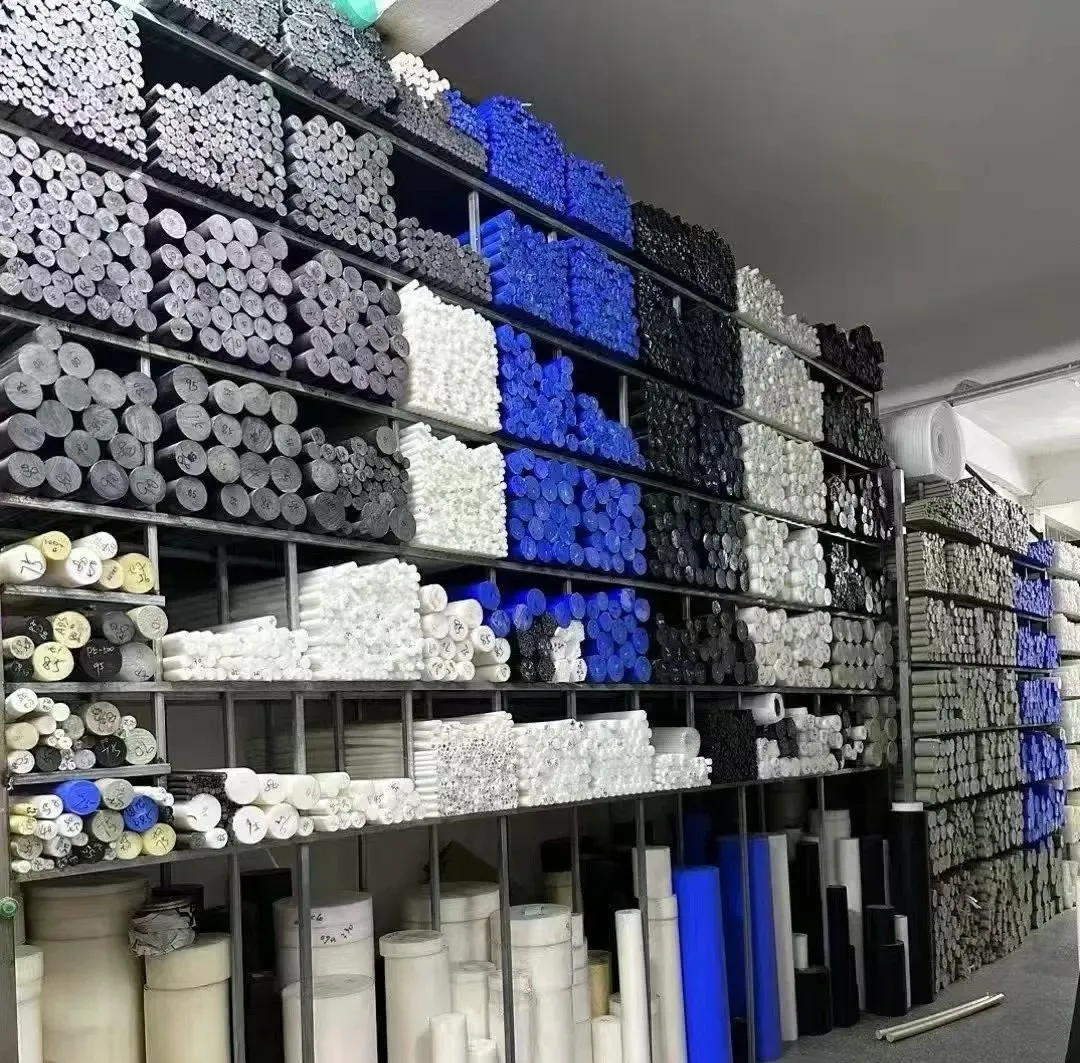
Nylon
and engineering-plastic stock shapes for CNC machining and
prototyping.
PA6 vs PA66 vs PA11 vs
PA12 at a Glance
| Material | Typical strengths | Main limitations | Common prototype uses |
|---|---|---|---|
| PA6 | Tough, wear resistant, widely available, cost-effective | Relatively moisture sensitive; dimensions and properties can change with conditioning | Bushings, guides, wear parts, general functional prototypes |
| PA66 | Generally stiffer and more heat resistant than unfilled PA6 | Still moisture sensitive; grade and conditioning strongly affect data | Structural components, gears, supports, under-hood validation parts |
| PA11 | Low moisture uptake, flexible, good impact performance, bio-based options available | Less common as machined stock; grade availability and cost can be limiting | Flexible functional parts, low-temperature applications, tubing-related prototypes |
| PA12 | Very low moisture uptake within the PA family, good dimensional stability and chemical resistance | Lower stiffness than PA66 in many unfilled grades; cost can be higher | Precision prototypes, pneumatic parts, SLS components, chemically exposed parts |
These
are selection tendencies, not guaranteed values. A glass-filled PA66,
an impact-modified PA6, or a plasticized PA11 can behave very
differently from an unfilled natural grade.
Why Moisture Absorption
Matters for Nylon Parts
Polyamides
absorb moisture from the environment. Moisture can change dimensions
and also alter stiffness, toughness, and other mechanical properties.
Short-chain polyamides such as PA6 and PA66 are generally more
moisture sensitive than long-chain PA11 and PA12. This is why a
dimension measured immediately after machining may not represent the
part after conditioning in a humid environment.
For
tight fits, seals, bearing locations, and inspection features,
specify the intended conditioning state and service environment. Do
not apply one universal drying cycle to every nylon grade or stock
shape. Machined stock, molding pellets, and SLS powder have different
handling requirements, so the material supplier’s technical data
and process instructions should control.
PA6: A Practical
General-Purpose Nylon
PA6
is widely used for mechanical components because it combines
toughness, abrasion resistance, machinability, and relatively broad
stock availability. It can be a sensible choice for wear pads,
guides, rollers, bushings, and prototypes that do not require the
highest dimensional stability in changing humidity.
Its
main design consideration is moisture sensitivity. A PA6 component
can absorb enough moisture to affect dimensions and mechanical
response, especially when moving from a dry shop environment to humid
service. For a close-tolerance assembly, define the measurement
condition and consider machining allowance, conditioning, or a
lower-moisture material.
PA66: Higher Stiffness
and Heat Resistance
Unfilled
PA66 is commonly selected when higher stiffness, strength, and heat
resistance are needed compared with a similar unfilled PA6 grade. It
can machine with a clean, stable cut when the stock is properly
supported and the tooling is sharp.
PA66
is not moisture-proof. Its properties and dimensions still depend on
grade and conditioning. Reinforced PA66 grades can offer much higher
stiffness, but glass or carbon fiber also changes tool wear, surface
finish, edge behavior, and anisotropy. Confirm whether the drawing
calls for unfilled, glass-filled, heat-stabilized, lubricated, or
another modified grade.
PA11: Flexible,
Low-Moisture, and Impact Resistant
PA11
is a long-chain polyamide known for relatively low moisture uptake,
flexibility, impact resistance, and dimensional stability in humid
conditions. Commercial PA11 families also include bio-based grades
derived from castor-oil feedstock.
For
prototypes, PA11 can be useful when flexibility, repeated
deformation, low-temperature impact, or moisture exposure matters
more than maximum stiffness. Availability as machinable rod or plate
may be more limited than PA6 or PA66, so the intended process and
supplier should be confirmed early.
PA12: Dimensional
Stability and Broad Process Use
PA12
has one of the lowest moisture-absorption levels among commonly used
polyamides. It is valued for dimensional stability, toughness,
chemical resistance, and performance across a wide temperature range.
These characteristics make it attractive for precision prototypes,
pneumatic components, electrical insulation parts, and applications
exposed to fuels, oils, or humidity—subject to grade-specific
compatibility data.
PA12
is also a widely used material for SLS
3D printing. For
complex low-volume parts, SLS PA12 may avoid the stock waste and
tool-access limits of machining. For tight bores, critical surfaces,
or better local accuracy, a machined PA12 part—or a printed part
with secondary machining—may be more suitable.
How to Choose the Right
Nylon
| Priority | Usually evaluate first | Why |
|---|---|---|
| Lowest cost and broad stock availability | PA6 | Common general-purpose engineering nylon with good wear performance |
| Higher stiffness and heat resistance | PA66 | Often stronger and stiffer than comparable unfilled PA6 |
| Flexibility, impact, and humid service | PA11 | Long-chain structure supports lower moisture uptake and flexible grades |
| Dimensional stability and low moisture uptake | PA12 | Well suited to precision prototypes and humid or chemically exposed environments |
| Complex SLS prototype | PA12 or PA11 | Both are available in additive-manufacturing grades with different stiffness and ductility profiles |
CNC Machining
Considerations for Nylon
Use Sharp Tools and
Control Heat
Nylon
is relatively soft and can deform or smear when heat builds up. Sharp
cutting edges, suitable rake geometry, controlled engagement, and
effective chip removal help reduce burrs and improve finish.
Parameters should be adjusted for the exact grade and part geometry.
Support Thin Walls and
Flexible Features
Flexible
walls, long ribs, and thin rings can move under clamping or cutting
forces. Use stable datums, distribute clamping pressure, and consider
leaving support material for later operations.
Plan for Stress and
Dimensional Change
Extruded
or molded stock can contain residual stress. Heavy, uneven material
removal may release that stress and distort the part. Roughing, rest
periods, balanced stock removal, and a separate finishing operation
may be appropriate for demanding geometries.
Define the Inspection
Condition
For
moisture-sensitive PA6 and PA66, the drawing or inspection plan
should clarify whether dimensions apply in the dry-as-machined state,
after conditioning, or at a defined temperature and humidity. This
prevents disputes when the same part measures differently at
different points in its moisture cycle.
CNC Machining or 3D
Printing?
CNC
machining is often preferred for simple geometry, critical bores,
flat sealing surfaces, tight local tolerances, and parts that must
match a specific stock grade. SLS is attractive for complex internal
geometry, lightweight structures, fast iteration, and low-volume
assemblies without tooling.
HengDa
supports both nylon
3D printing and CNC
machining. A hybrid route can also work: print the near-net shape,
then machine critical interfaces where the design and material allow
it.
What to Include in a
Nylon Part RFQ
Provide
the 3D CAD file, 2D drawing, exact polymer and grade, color,
reinforcement, quantity, critical tolerances, surface requirements,
operating temperature, moisture or chemical exposure, inspection
condition, and target process. If the grade is not fixed, describe
the functional requirement instead of asking for “nylon” only.
For
a material and manufacturability review, contact
HengDa with your
CAD data and application requirements. Our team can compare CNC
machining, SLS, and other rapid
prototyping routes
before quotation.
Frequently Asked
Questions
Is PA66 always stronger
than PA6?
A
comparable unfilled PA66 grade is often stiffer and stronger than
unfilled PA6, but “always” is not accurate. Reinforcement,
additives, moisture content, test method, temperature, and supplier
grade can reverse a generic comparison. Use the exact datasheets.
Which nylon absorbs the
least moisture?
Among
PA6, PA66, PA11, and PA12, PA12 generally has the lowest moisture
uptake, while PA11 is also much less moisture sensitive than PA6 and
PA66. Grade-specific data still applies.
Is PA12 the best nylon
for precision parts?
PA12
is often a strong candidate because of its dimensional stability, but
the best choice depends on stiffness, temperature, chemical exposure,
load, wear, process, availability, and cost. POM, PEEK, or another
engineering plastic may be a better fit in some applications.
Should nylon be dried
before CNC machining?
Do
not use one universal drying instruction. Machinable stock and
molding or printing feedstock are handled differently. Follow the
stock supplier’s guidance and define the inspection condition for
moisture-sensitive dimensions.
Technical Sources Used
for Fact-Checking
Ensinger
polyamide material overview;
Ensinger
PA12 material page;
and Arkema
Rilsan PA11 key properties.
Values must still be checked against the selected commercial grade.