
— A reflection for fellow manufacturers, and for ourselves
Life is unpredictable. What looks simple on the surface can hide a much bigger problem underneath.
That’s exactly how I’d describe what happened to us recently.
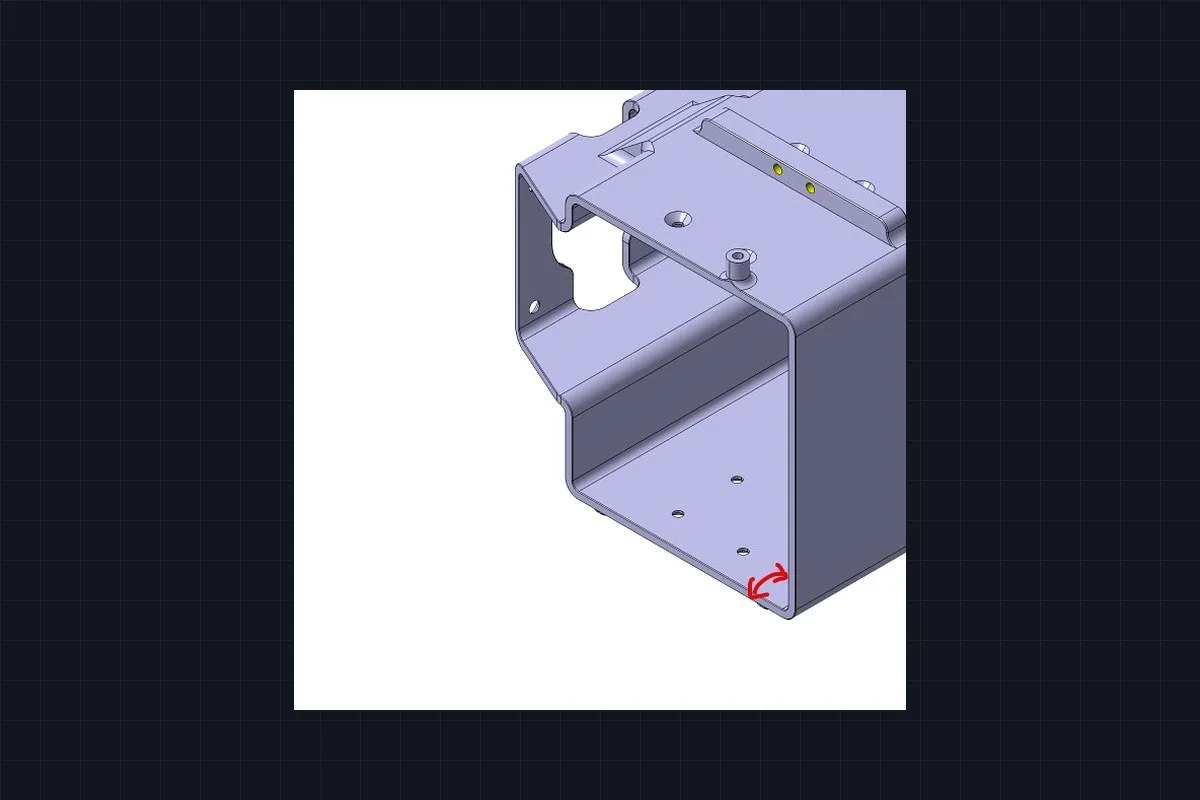
We delivered a batch of axis-CNC-machined parts. The drawing called for R3. We shipped R6. The customer couldn’t assemble them. 250 pieces — all requiring rework.
I’m not in a position to blame the customer for being strict. The mistake was ours.
How It Happened
During production, the R3 tool couldn’t reach the bottom of the feature. Switching to R6 worked. The operator didn’t stop to ask. During inspection, our QC noticed the dimensional discrepancy — but since that area wasn’t explicitly dimensioned on the 2D drawing, they assumed it probably didn’t matter, and passed the parts.
One unspoken question. 250 defective parts.
Where the Real Problem Lies
It wasn’t the tooling. It wasn’t an unclear drawing. It wasn’t bad luck.
The real problem was this: we had quietly built a culture where “not wanting to cause trouble” was the default.
When QC found the anomaly, their first instinct wasn’t to escalate — it was to judge whether the customer would care. That judgment was never theirs to make. But no one had told them otherwise, and no system stopped them.
The authority to interpret a tolerance had drifted — without anyone noticing — from the engineer to the gut feeling of a floor inspector.
How To Handling It
Shipping the parts back for rework? Round-trip logistics alone would take 15+ days, wire EDM another 7 days, total 22+ days minimum — not counting shipping uncertainty and freight costs the customer simply can’t wait for. If redo, need about 30 days.
Our decision: have the customer source local rework, and we cover the cost.
It’s the fastest path forward with the least additional damage. But writing that check stings.
What We’ll Do Differently
Boss siad only one rule, from now on: any deviation from drawing dimensions — whether explicitly toleranced or not — must be confirmed with the customer before proceeding.
Not because customers are demanding. Because we don’t have the right to decide for them which dimensions matter.
I’m not writing this to vent. I’m writing it because this failure is so textbook it hurts.
Tool can’t reach → swap the tool → parts come out → nobody speaks up → parts ship → problem surfaces.
Every single step had a reasonable excuse. Together, they caused a crisis.
To anyone reading this in their own shop: do your people find it easier to stay silent than to speak up when something looks wrong?
Ours did. We’re changing that.