
Simply put, pad printing is the process of printing on various objects with irregular surfaces or shapes. In this era of personalization, it is essential in many industries, from niche brands in the fashion industry to customized services for technology products . Pad printing technology is not only cost-effective, but also provides a variety of color options and high-quality printing. Today, let us learn more about this personalized printing technology.
What is pad printing ?
Pad printing technology is essentially an advanced printing process that uses a special silicone pad as a medium to skillfully transfer a pre-designed image from a fixed printing plate to a variety of substrates of various shapes and materials.
This unique printing method has extremely high flexibility and adaptability. It can easily cope with and perfectly present complex patterns, fine text or unique logos, and can achieve high-quality printing effects on flat, curved, or uneven surfaces. It is precisely because of the excellent printing ability and wide applicability of pad printing technology that it is particularly valuable and indispensable in the field of personalized product manufacturing, and has become one of the preferred technologies for many manufacturers.
How Does Pad Printing Work?
Pad printing is a special printing technology that works based on three main steps:
1. Inking :
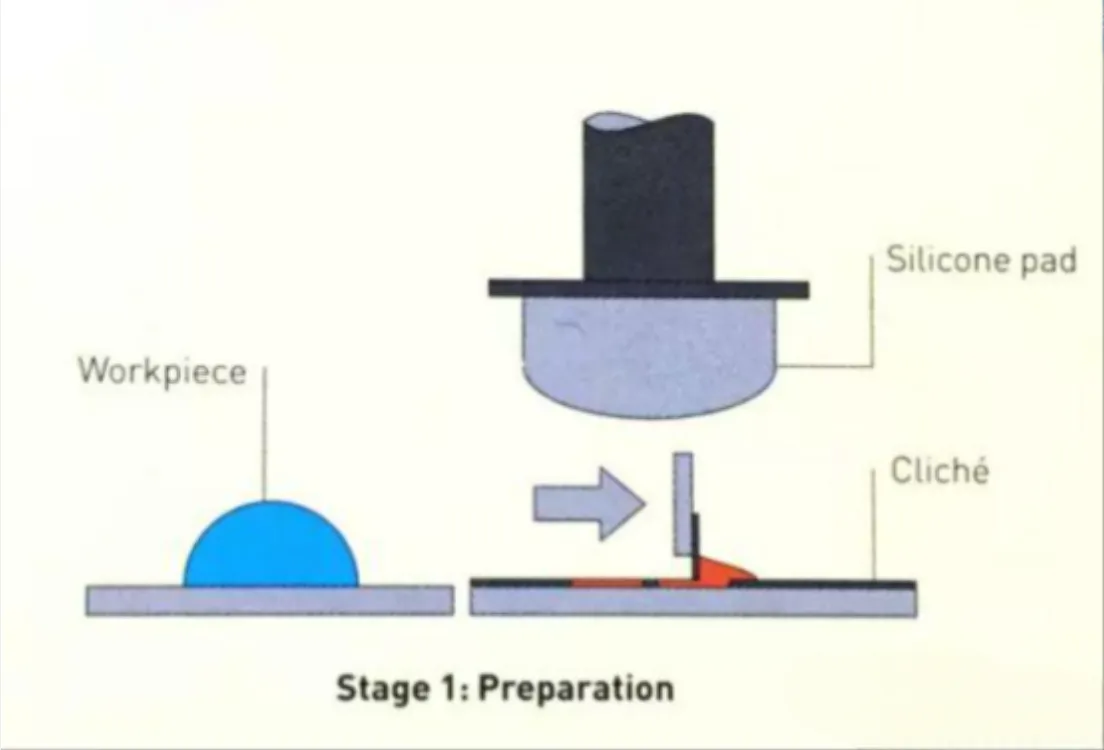
First, the pattern or text to be printed is engraved on the pad printing steel plate, and these pattern parts are concave grooves. At the beginning of pad printing, the pad printing rubber head moves above the pad printing steel plate, and then the scraper evenly applies the ink on the surface of the steel plate, and the ink will fill the grooves of the pattern on the steel plate. After that, the scraper scrapes off the excess ink on the surface of the steel plate, leaving only the ink in the grooves. This step ensures that only the part of the pattern to be printed has ink, preparing for the accurate transfer of ink to the product surface.
2. Pad printing :
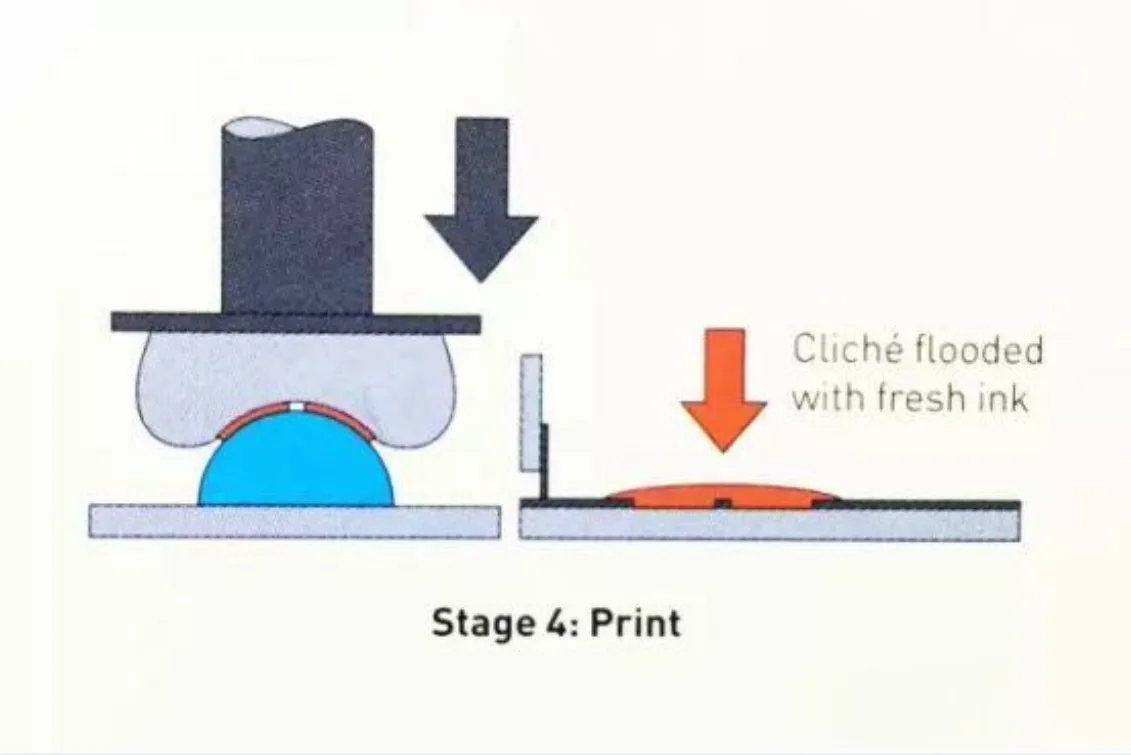
Next, the pad printing rubber head descends and contacts the steel plate. Since the pad printing rubber head has good elasticity and adsorption, it can absorb the ink in the groove of the steel plate. After absorbing the ink, the pad printing rubber head rises and moves above the product to be printed, and then descends again to transfer the ink absorbed on the rubber head to the surface of the product under a certain pressure. This transfer process can accurately replicate the pattern on the steel plate. No matter how complex the shape of the product is, as long as the pad printing rubber head can contact the surface of the product, the pattern can be printed.
3. Drying :
After the ink is transferred to the product surface, it is dried and solidified by natural drying or heating, so that the pattern is firmly attached to the product surface, completing the entire pad printing process. The speed and method of drying depends on factors such as the type of ink and the material of the product. For example, some quick-drying inks can dry quickly at room temperature, while some special inks or materials may require special treatments such as heating and drying to accelerate the drying process to ensure the quality and durability of the printed pattern.
Advantages of pad printing
As an important printing process, pad printing has many advantages:
ΔStrong adaptability :
Pad printing can print on the surfaces of objects of various shapes, sizes and materials. Whether it is a regular flat object, such as paper, plastic board, or a complex three-dimensional object, such as toys, golf balls , irregular electronic product shells, etc., it can be easily handled. As for the material, it can basically print on any material, such as metal, plastic, glass, ceramics, wood and other materials, which meets the decoration and identification needs of products in different industries.
ΔHigh printing precision :
It can realize very fine pattern and text printing. Its printing resolution is high, and it can clearly present patterns with fine lines and rich colors, and even accurately restore tiny text and complex pattern details. For example, printing delicate scales, brand logos and small functional descriptions on watch dials, or printing exquisite trademarks and patterns on cosmetic packaging, pad printing can achieve high clarity and accuracy, meeting customers’ requirements for product appearance refinement.
ΔLow cost :
Pad printing is cost-effective and relatively simple to operate. In the printing process, pad printing consumables are mainly ink, rubber head and steel plate, etc. These consumables are relatively cheap and easy to replace , especially suitable for small batch production. For example, for the production of some personalized gifts, small batch orders use pad printing technology, which can not only ensure the printing effect, but also effectively control the cost.
ΔHigh flexibility :
During the printing process, changing the plate is convenient and fast. When the printing pattern, text or color needs to be changed, only the corresponding pad printing plate needs to be replaced to quickly switch to produce different products, which greatly shortens the production preparation time and improves production efficiency. This flexibility enables enterprises to quickly respond to changes in customer needs , adjust product printing content in a timely manner, and meet customers’ diverse and personalized requirements .
ΔGood ink adhesion :
The ink used in pad printing can be well combined with the surface of the printed material to form a strong adhesion. The printed patterns and text have good wear resistance, corrosion resistance and scratch resistance. Even if the product is repeatedly rubbed and exposed to different environments during daily use, the printed content is not easy to fade or fall off. The decorative patterns and logos printed on its surface by pad printing can remain clear and complete for a long time and withstand the test of complex environments.
Application of pad printing technology
Pad printing is widely used, from daily necessities to industrial parts, from plastic products to electronic consumer products.
− Electronic and electrical industry:
In the electronics and electrical industry, pad printing technology is widely used in the shells and keyboards of various electronic products, such as smart phones, laptops, flat-screen TVs, etc. Through the pad printing process, brand logos, product models, function icons, operating instructions and other information can be clearly printed. In addition, pad printing technology can also print personalized decorative patterns on the shells of electronic devices to meet users ‘ diverse needs for product appearance.
−Plastic products industry:
In the plastic products industry, pad printing technology is often used to print identification information on various daily necessities. For example, on plastic cups, plastic tableware, plastic toys and other products, trademarks, brand names, instructions for use, and cartoon images can be clearly printed through pad printing. Cute patterns on plastic cups and character images on toys not only enhance the recognition of products, but also increase the fun of products, allowing consumers to experience more fun during use.
At the same time, pad printing technology also plays an important role in industrial plastic products, such as plastic pipes, plastic valves, etc. Through pad printing, specifications, models, flow direction arrows and other identification information can be clearly printed on these parts, which greatly facilitates installation, use and maintenance, and improves work efficiency and safety.
− Metal products industry:
In the metal products industry, pad printing technology is widely used on various metal parts in mechanical equipment. Through pad printing, traceability information such as part number, production date, batch number, etc. can be clearly printed. This information is of great significance for production management and quality traceability, which facilitates enterprises to carry out effective quality control and management in the production process and ensure the stability and reliability of product quality.
−Auto parts industry:
Interior logo: In the automotive parts industry, pad printing technology is mainly used for the printing of logos on automotive interior parts. For example, on car dashboards, center consoles, door interiors and other parts, pad printing can clearly print operation instructions, brand logos, scales and other information. This not only provides clear operating instructions for drivers, but also improves the overall aesthetics and quality of the interior of the car, and enhances the user’s driving experience. In addition, for key automotive parts such as engines and gearboxes, pad printing can print traceability codes such as production numbers, production dates, batch numbers, etc. on these parts, which facilitates enterprises to conduct effective traceability and management during quality control and after-sales maintenance, ensuring product quality and service reliability.
The perfect combination of technology and art
Pad printing is not just a technology, it is the perfect combination of technology and art. Every printing is a process of artistic creation. It requires precise color matching, fine image processing and accurate positioning technology to ensure the quality of the final product. All of this is inseparable from the joint efforts of engineers and designers behind the scenes.
If you are interested in Pad Printing technology, or want to add a unique mark to your product, please contact us immediately . We provide professional pad printing services, whether it is a small batch customization demand or a large batch production task, we can meet it.
In order to better understand your needs, we provide free consulting services , please leave your contact information to contact us !